When Technovation asked me to design this report, the contributor list alone told me this wasn't a small ask. Google. UNICEF. EY. Shopify. Grameen Foundation. These weren't logos they were rooms full of people who'd spent time on this research. My job was to design something worthy of it, and with a 3 day turnaround.
The report makes a $212 billion economic argument for putting women and girls at the center of the AI revolution. Across 91 countries. With the data to back it up. It needed to look like it belonged on the desk of someone who could actually do something about it.
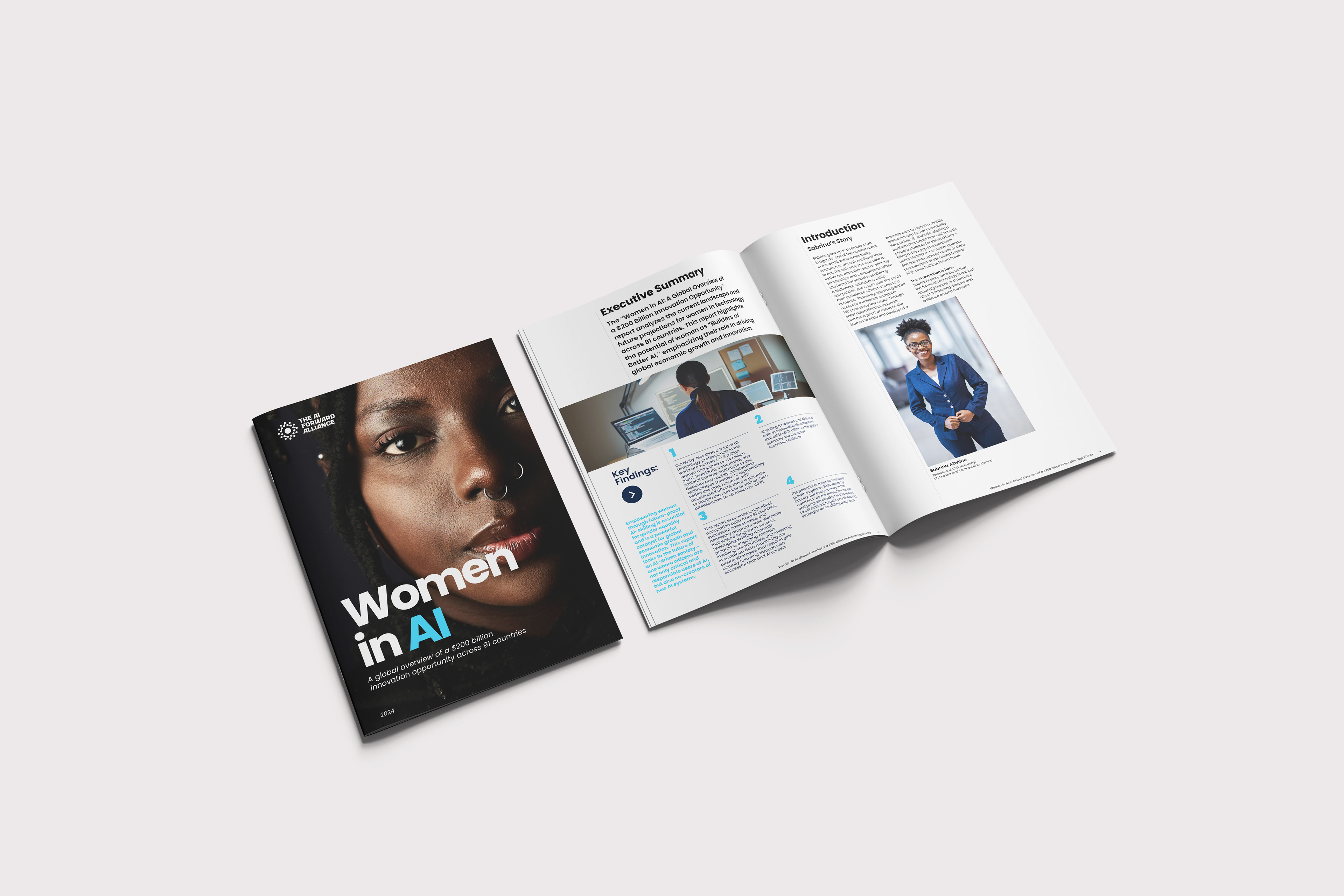
Thirty-two pages sounds manageable until you're staring at longitudinal data from 91 countries, economic projections, policy frameworks, and Sabrina's story from Uganda all needing to coexist without one drowning out the other. That tension is what made this project interesting to me.
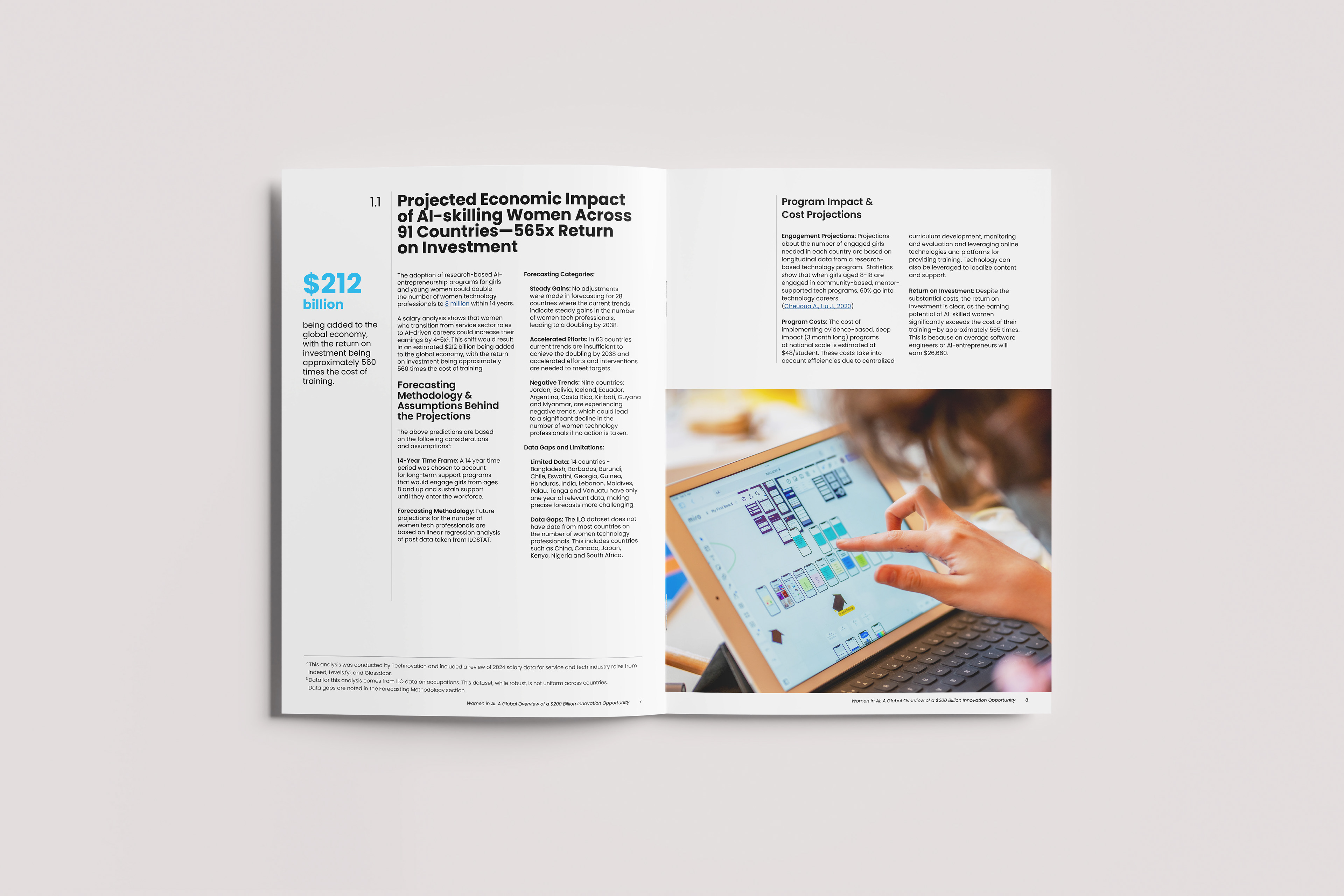
The grid had to do a lot of quiet work. Data sections needed structure and credibility — the kind of layout that says we did the research, trust us. But then you'd turn the page and there's a young woman from Mexico who learned to code and ended up at Microsoft, and suddenly the design needed to breathe completely differently. I had to build a system flexible enough to hold both without feeling like two different documents.
The cover was the decision I cared most about. The original used that cold blue network graphic that every AI report reaches for. Abstract, safe, forgettable. I pushed for a portrait instead. A real face. Direct gaze. Because the entire argument of this report is that the future of AI isn't in a server room, it's in the hands of women the world hasn't met yet. The cover should say that before anyone reads a word.
Three days. Thirty-two pages. Ninety-one countries.
The challenge was building a layout system that could hold dense economic data and deeply human stories on the same page without one flattening the other. Longitudinal projections sitting next to Sabrina's story from Uganda. Policy frameworks next to a girl in Mexico who learned to code and ended up at Microsoft. The grid had to be strong enough to give everything its own weight.
Under a three day deadline you don't get to second guess. You just have to trust your instincts and build.